Monday, October 13, 2014

Followup

I really enjoy my job as a math education specialist. However, I have had a lingering concern about the lack of follow-up that my job allows. Most of the time I work with teachers for very short periods of time. Sometimes as short as 1 hour. I then may not see those teachers for several weeks, months, or longer. This always makes me wonder how much of the information that teachers are able to effectively integrate into their practice.

How can I effectively follow up with teachers to support effective change?

This question has been following me since I began delivering PD to teachers in Pinal County over a year ago. Today I think I came up with an idea. Although I have not ironed out the details, I feel that asking teachers to report back electronically after a specified period of time will allow them to feel supported and to ask questions that come up as they attempt to change the way they operate within the classroom. Below are some ideas that I will think more about and use as follow up activities.
  1. Using a forum on my website - I would ask participants to report what they have implemented into their classes after a given time (1-2 weeks) and their reflection on how it went. Also, they could ask any questions that may have arisen or ask for advice from myself and other participants.
  2. On a PD blog - similar to using the above method however this would be more public. Perhaps a benefit of this format would be the reach. The questions, advice and conversation could potentially reach more people therefor allowing for collaboration on an even greater scope.
  3. A scheduled Google Hangout - have the participants "meet" at a predetermined time to hold a video conference concerning what they have incorporated and the success and challenges they have faced. I like this idea the most, but scheduling will be a challenge.
  4. Set up courses in Blackboard or Moodle - This would have the added benefit of having all of the materials available for participants in one location. As in using a forum on my website I would use the forum feature to facilitate discussions.
I'm sure there are other ways to do this and I would be super happy to have you share those with me. This is an endeavor that I feel is important and I have no idea of whether or not it will have any positive effect but as my Mom always told me, "You never know unless you try."

Happy mathing! 

Tuesday, August 19, 2014

To 3-Act Math or to not 3-Act Math?

Recently, I was tutoring and a student asked me for help with what I found to be an interesting question.

"There are 2 stools, one 3-legged and one 4-legged. One of the stools wobbles slightly.
  • Which one is it? How do you know?
  • Suppose that each stool is placed on a flat surface that is slightly sloped. Do you expect either of the stools to rock side to side? Explain why or why not. 
 Life experience led me to the correct answer yet I had to think for a moment to consider how to help the student understand the underlying concept that any 3 points make a plane.

Concurrently, I was thinking that a much better way of presenting this question to the students would be during an inquiry activity. It would allow students to discuss their ideas with one another and collaborate in order to make a precise statement defending their position. It would allow students to make a connection between "real-life" and mathematics - an opportunity to understand that there is a mathematical explanation for an what many students may have already observed during their lives. It demonstrates that people use math to explain the world around them. This idea also has applications such as the use of tripods.

I thought more about the question as I drove home and considered how I might have introduced this to students and what tools I may provide to them in order to experiment and get them interested in the task at hand. I turned to my PLN for ideas and posted the question and asked "Could this be improved? How could tech be integrated?"

A conversation followed between myself, +Jeremy Bell, and +Kyle Pearce. They both offered suggestions. The conversation then turned to whether or not the concept warranted the creation of a 3 Act Math Task or not. I would argue that this is an opportunity for students to have a math talk about a concept that is pretty simple, yet difficult to explain without mathematics vocabulary. Perhaps I view this activity as one that could be done at the beginning of the semester in Geometry. It could be used as an opportunity for the teacher to demonstrate to the students how to engage in math talks and share ideas. Also of emphasis could be that learning will take place through inquiry and discovery activities. This is a significant change for many students as they have been taught in a more traditional direct instruction model.

I also understand the other side of the argument. The same idea may be conveyed through a quick demonstration or even an explanation. The concept is not one that is of great focus in Geometry. It may be wasted time to create a 3 Act Math Task for this small concept and it may be a waste of time to have students work through a process.

So the question stands. Do you think that a 3 Act Math Task is an effective way to help student uncover the idea that 3 points always make a plan, or is it wasted time and resources for this particular topic?

Wednesday, August 6, 2014

Mini Goals

Lately I have been working hard to try to stick to a workout schedule. With the start of the school year (yes in AZ it starts at the end of July or beginning of August) it means my wife will be going back to work and I will once again have the pleasure (or duty - depending on the day) of transporting our three year old to daycare a preschool. Sticking to a workout schedule becomes more difficult. I also tutor at Grande Sports Academy, a residential soccer program, three nights per week. So the schedule gets more hectic and getting up with the alarm at 5 gets tougher.


While running earlier this week I found myself wanting to take a walking break after running just over a mile. With another 1.5 miles to go, I was having a sort of internal struggle over whether or not to take a short walking break. My hip was hurting, I was out of breath, and my allergies were causing issues beyond the normal. The struggle led me to keep setting mini-goals. Keep running to the next intersection, then the stop-light, then catch that guy that is walking, then to the corner in front our house. Before I knew it, the run was over and I never did take a walking break. I find myself doing this when I work out. One more set of 10 burpees, 15 more seconds planking, 3 more sprints, etc. I break down a workout that seems overwhelming into a series of mini-goals. This helps me keep from giving in to the aches, pains, or lack of motivation.

Amid the argument in my head, I began to realize that this strategy can apply to other areas of life. I specifically thought about using this strategy in education. Instead of being overwhelmed by a larger goal you may have (integrate technology, implement problem-based learning, etc.) break a larger, long-term goal into one mini-step at a time.

As a trainer this is something that I sometimes fail to do. I fail to help participants break an overwhelming task into smaller more attainable mini-goals. This is one great weakness that I see in the model of PD that I am sometimes asked to deliver. One-time, all-day PD sessions often have excellent content, strategies, resources etc. However, they truly lack in follow-through and support. Fortunately many schools are beginning to ask for follow up support as their teachers implement the new _______________ that has been presented. It is more effective and it seems that teachers are much more willing and able to truly change their teaching when this support is provided.

My goal is to be more cognizant of what my long-term goals are and work to create mini-goals that lead me to the finish line. Although, if you are a runner you know that one finish line leads to another start.

What are your long-term goals and what are some mini-goals that will help you get there?

Tuesday, July 29, 2014

Collaboration vs. Working in Groups

Yesterday I lead PD with a wonderful group of teachers who are preparing for the coming school year. The topic of the day was writing effective, standards based learning objectives and assessments. Although the day was filled with great conversations, questions, ideas, and just overall good fun, one particular conversation really caught my attention. We discussed the question... 

How is “collaboration” different than “working in groups? 

A rich discussion ensued in which it became quite apparent that no one in the room could clearly define collaboration or explain exactly what it would look like with a group of students. Further, it was stated that this is why students fail to meet our expectations of working "collaboratively" and ultimately may end up simply "working in groups." After all, if the teacher does not have a clear understanding of what collaboration is and what it looks like, how can one expect the students to "collaborate effectively."

We did however reach consensus on a few points.

  • Collaborative work requires that all members contribute in a meaningful way
  • All members must improve their understanding of the topic/task through the work
  • Clear communication is a must
Some other ideas were tossed around but were not agreed upon.
  • All members have an established role
  • Divide and conquer is a form of collaboration (this was quite controversial)
  • All members do an equal part
The conversation lasted at least 15 minutes and could have carried on much longer but we decided that our collaboration on the topic must cease so that we could try to get through the remained of the scheduled activities. Another great point came about was the impact of status in the classroom. We all know those students that are looked at as experts in the classroom and others depend on them for the answers. Status can have a great impact on how students collaborate (or fail to collaborate) with one another.

As I reflect, I was still struggling to identify a set of characteristics that could be used to identify effective student collaboration. I did a little Googling this morning and read some information about effective collaboration. Although some of what I read was focused on education, the majority was about collaboration in the business world. Much of it can be applied to classroom settings. Especially since one of the major goals of education should be to prepare students for life after school. Many students will at some point need collaboration skills in the pursuit of higher education and/or in their chosen career.

I first read "What is Collaboration?" The article defines collaboration as; a working practice whereby individuals work together to a common purpose to achieve business benefit. It also lists two keys features 1) synchronous collaboration such as online meetings and instant messaging 2) asynchronous collaboration such as shared work spaces and annotations. The author points out that collaboration depends on openness and knowledge sharing but also some level of focus and accountability.

Clearly the "math guy" I am was going to need a bit more investigating to figure this out. Synchronous and asynchronous are not words used in my vocabulary with any regularity (or ever if I am being honest). But thanks to the good ole interweb, my suspicions were confirmed. Now time to apply this to teaching and learning. It appears that our discussion was on track if we follow this definition. Synchronous collaboration takes place while individuals are working on something at the same time, or at different times. The key is that they are all contributing to one product and all portions of the product. Communication, openness, and knowledge sharing are important to successful collaboration. This confirms our thoughts that all members must contribute their knowledge and understanding and be willing to provide and receive feedback in an open manner. 

Now we are getting somewhere. In the haze, a shape is starting to take form.

I like the visual representation, but at first was unsure how many of these relate to school and students. After reading the descriptions, a few fit really well. 

Lead by example - Some teachers tend to work in isolation. How can we expect students to collaborate or see the value in collaborating when we don't collaborate with our peers. It's also a good idea to collaborate with your students. Let them see that they do have value and that their ideas can help improve the class. Letting go means you don't have to have all the answers and models how to discover, learn, and adapt through a collaborative process.

Create a supportive environment - This is vital. In order for students to collaborate effectively they need to feel comfortable taking chances and sharing their thoughts and opinions. This is especially true when there are students of differing status within a group. 

Persistence - Collaboration is not innate to students. We need to have persistence in helping them collaborate with one another. The article speaks of following through with creating a collaborative atmosphere even when initial attempts fail. Persisting, even in the face of failure, is another opportunity to model attributes we would like our students to develop. 

Collaboration can make the world a better place - Students are social beings. Why not use this to our advantage. Collaborating brings energy, excitement, and new ideas to a group. Not to mention a sense of responsibility. If I know my team is counting on me, I am more likely to do my part. Especially if I know that I will be supported and appreciated. 

So back to the initial question, how are collaborative groups different than groups that work together. Collaborative groups are interdependent and interactive. The groups strength is the group itself. Without the group the individual parts will experience a lower level of growth. Groups that are simply working together are not dependent on one another. One member of the group may simply do most or all of the work and tell others what they have done with no critique of input from the others. Unfortunately I see this happening in classrooms (including my own). It is a difficult task to create a truly collaborative experience for students, but one that holds great value. 

I have now outlined what I feel differentiates "working in groups" from working collaboratively. What are your thoughts?

Tuesday, July 22, 2014

Goals for a New Year

Many teachers and students are already headed back to school. Depending on where you live you may have a few weeks left to enjoy before you head back to school, excited, inspired, and rejuvenated for a new year with new students. Since my job is a 12 month position I am not headed back to the grind after a summer off, but I am however reflecting on the past year and creating some goals for the 2014-2015 school year.

We all naturally head into the new year thinking about what it is we want to change, things to do better, things to experiment with, and certainly those few things that were such a catastrophe that they will never again see the light of day. I thought I would take this opportunity to write about some of my goals and put them out there for the entire world to see - or at least the one person who is now following my blog. Thanks Heather! Congratulations! You are my first "follower." There are no special prizes or gifts, but know that you have made me feel important. Pretty exciting for me. And really the inspiration for me to write this today.

Here are some of my professional goals for the following year.


  1. Blog more - Although this is only the 3rd blog post that I have added to this blog, I really do see the importance of it. According the stats, there are at least a few people reading what I write. Ideally they are reading and thinking about their practice - whether they agree or disagree with me is really unimportant. I also find blogging gives me a chance to reflect on my own beliefs and practices. I find myself thinking about possible blog topics while I am working out in the morning. This time allows me to collect and work through my thoughts. Most of the time these inner "conversations" never make it to the blog, but still hold value. 
  2. Get more people using Twitter as a part of their PLN - After working with many of the schools in the county where I work, very few are using Twitter as a professional learning tool. I sort of stumbled on Twitter as a PLN myself this year and am amazed at the interactions I have had and the information that is constantly being shared. I am often intimidated and feel that I am not an "expert" like those that I follow, but I am discovering that I do have valuable information to share. I would really like to have some teachers from every district following me on Twitter. Last week I gained my first followers from Pinal County. Very exciting. I think that a virtual PLN is vital to the success of our rural districts due to their isolation and their size. It's pretty difficult to collaborate and gain momentum for change when your whole department consists of one teacher. Pretty lonely conversation.
  3. Be part of at least one grant opportunity - This is definitely one of my weakest areas. I know next to nothing about grants, so I can not even make this goal more specific.
  4. Conduct a webinar - Our office has discussed several times of how to reach more teachers, especially those in outlining areas. Webinars are one solution that has been talked about, but no one has jumped on the train. Sad, but unfortunately it is reality. My goal is to regularly conduct webinars.
If you feel so inclined, comment and share ideas for my goals (how I can accomplish, if you think they are worthy, etc.) and/or share your goals for the year. I know that every teacher has great ideas and "big thoughts" for the new school year. Share some of these great ideas and goals and maybe you will inspire someone else.

Oh one more. I need to start wearing more shirts like this.


Thursday, May 15, 2014

Unproductive Beliefs

I recently attended "Mathematics in the Mountains" in Flagstaff Arizona. The conference was being held for the first time and organized by Arizona Association of Teachers of Mathematics. It was held on the campus of Northern Arizona University. It was also a great time to be away from the valley as it was the first 100+ degree day of the season. Many more to come very soon.

One of the sessions I attended was "Principles to Action: Ensuring Mathematical Success for All, NCTM's New Blueprint for School Mathematics" led by Jane Gaun of the Flagstaff Unified School District. All day I was looking forward to attending this session. I had previously watched the video of Steven Leinwand talk on the "Principles to Actions" at NCTM. When I saw that there was going to be a session based on the "Principles to Action" I was excited. Especially after seeing the passion with which Mr. Leinwand spoke of the book.

During the session, the presenter asked us to complete an activity. We were given a set of cards with a short phrase on it. We were then asked to sort the cards into two categories - those that are productive beliefs and those that are unproductive. We were to complete the task as a group and discuss any we disagreed on. It led to some rich conversation. It caused me to think about some of the common beliefs that are roadblocks to allowing all students access to high quality, math education. I hope that by writing some of these statements below a conversation can begin about these beliefs and how we can start hearing and seeing the productive beliefs more and the unproductive beliefs less. The statements are below and are in no particular order. Please comment on which ones you think are productive and which are unproductive with a rationale.

Let the conversation begin! Consider putting your response on Twitter using #PrinciplestoAction.


  1. The role of the student is to be actively involved in making sense of mathematics tasks by using varied strategies and representations, justifying solutions, making connections to prior knowledge or familiar contexts an experiences, and considering the reasoning of others.
  2. Students can learn to apply mathematics only after they have mastered the basic skills.
  3. Mathematics learning should focus on developing understanding of concepts and procedures through problem solving, reasoning, and discourse.
  4. The role of the teacher is to tell students exactly what definitions, formulas, and rules they should know and demonstrate how to use this information to solve mathematics problems.
  5. All students need to have a range of strategies and approaches from which to choose in solving problems, including, but not limited to, general methods, standard algorithms, and procedures.
  6. Students can learn mathematics through exploring and solving contextual and mathematical problems.
  7. Mathematics learning should focus on practicing procedures and memorizing basic number combinations.
  8. The role of the teacher is to engage students in tasks that promote reasoning and problem solving and facilitate discourse that moves students toward shared understanding of mathematics.
  9. An effective teacher provides students with appropriate challenge, encourages perseverance in solving problems, and supports productive struggle in learning mathematics.

Friday, April 25, 2014

The Common Core Standards as I See It.

The other day I had one of those "Aha" moments. Seemingly from nowhere, a random, moderately intelligent thought popped into my head. Perhaps this rare moment of clarity was due to the work that I have been doing with Disciplinary Literacy and preparing for presenting a Socratic Seminar to college students at the local community college. The latter is a pretty scary and daunting task for a "math specialists." However all survived and the students even seemed to understand the take-away that I was hoping for.

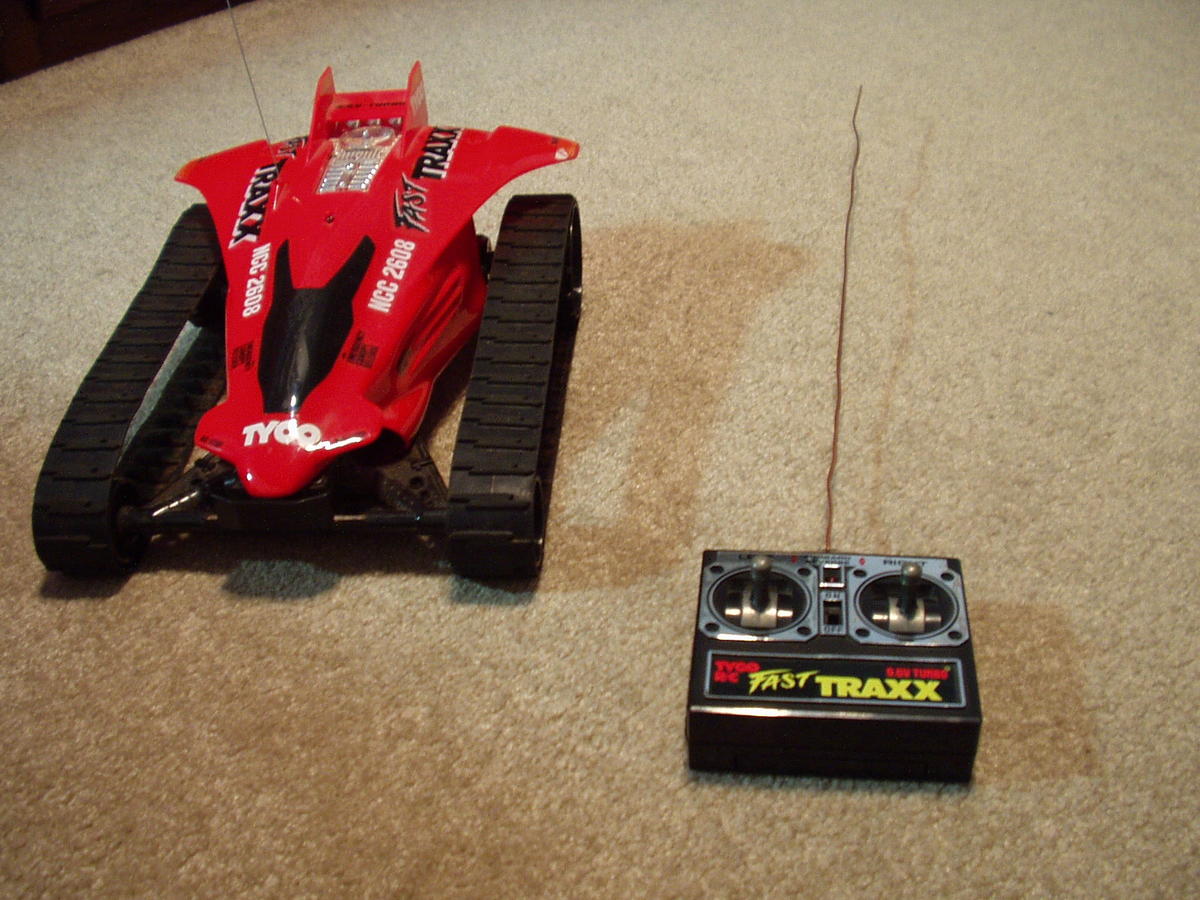
The moment occurred when I was driving home. For some unknown reason I was thinking about my days as a student in middle school woods class. I wasn't a very handy youngster. Breaking things and losing them were more my specialty than building and fixing. However, I was always very curious about how things worked. I saved up all my pennies from allowance to buy a Fast Traxx remote control car and took it apart countless times.
 I studied the gears and all of the internal parts to figure out just how everything worked. Like most people, unless I had the opportunity to get my hands on something and see and feel how it was put together I didn't understand it. Unfortunately my middle school woods teacher's teaching style didn't match my learning style. He was more of  a "show you how to do it once and you better get it" kind of teacher. I don't think he had any ill will toward me or had cooked up a scheme to keep me from ever having the ability to build something on my own. However, I was very frustrated in the class and remember crying with my mom about how difficult it was and I "Just didn't get it." The class was split into two portions. Book-work, where we learned the names of the tools, safety, different styles of cuts, joints, etc, and measuring, and the project, which required building a clock.

I excelled at the book work portion, acing assignments, quizzes, and tests. I bombed the clock. Several times the pieces I built were rejected by the teacher's quality control team that consisted of himself. Rather than giving me a second opportunity to learn what I did wrong and rebuild the piece, he would select the proper piece from a surplus of clock pieces that were collected over the years from student projects that were never completed. Half of "my clock" is really due to the work of other students. I feel like there should be a list of credits on the back. "Thanks to Billy for the face-plate since mine sucked!"

The point is, I knew how to use the tools, understood the safety and could measure like an expert. The area where I lacked, was using the tools to create a product. I'm not blaming the teacher. I'm sure that he was doing the best for me that he knew how and probably thought I had no interest in ever building anything after his 1 semester class. In fact, I should probably thank him. Perhaps this event is partially responsible for my view on teaching. If a student doesn't understand something and be able to apply it when appropriate, I take it very personally. It becomes my mission to help these students understand and conquer!

In essence, I am no different than many students in math class. Many students can repeat the steps that are taught to them by a teacher. Isolate the x, keep flip and divide, use the quadratic formula, etc but are completely lost when asked to apply their math skills to solve a "real-life" problem (how long will it take to fill your pool?). I knew how to use the tools that were available but was unable to use them in an application (build a clock).

This is exactly what we have been doing in math classes for a long time. We have been teaching kids a set of procedures that are seemingly unrelated and are then surprised that even though they may score well on our assessments they fail miserably when asked to apply these skills in novel situations. This is the concern that Common Core addresses. Not only in math, but across all subjects. Common Core asks us to help students really understand the concepts that we are teaching them and give them opportunities to apply what they know. The inquiry portion of Common Core math lessons are great! These answer the question that students have been asking for decades...I'm sure I don't have to write it but I will. "When will I ever use this?"

 I know this change in teaching is challenging and scary and tons and tons of work. But what a great opportunity. I have been talking with teachers recently and one of the things I emphasize is when students are in the inquiry phase we shouldn't care about the answer. In fact if we don't know the answer, or how to get the answer, or scariest of all, if there is an answer, it's ok. Life will continue. The students will be uncomfortable, frustrated, whinny, and even obstinate. But, they will be thinking and learning math as long as we foster the conversations and allow students to discover, experiment, fail, and try again.We need to put our focus on their thinking. Concentrate on what they are saying and how they are supporting their claims. This is the mathematical thinking that we have been missing. We need to focus on teaching students both the skills (procedures) and how they can use these skills to build a product (use their understanding of math to solve a problem). Just as in woods class it is important to be able to use the tools and build a product.


<http://206forthetwenties.files.wordpress.com/2008/10/p6160076.jpg>